Time

“The bad news is time flies. The good news is you’re the pilot.” – Michael Altshuler


image.jpeg

Time like beauty is in the eye of the beholder. It’s a personal perception based on emotions and events. There are numerous ways to define and describe time. When we’re bored, sick, waiting to hear test results, or longing for a loved one, time drags on. For children eagerly awaiting Christmas, summertime or their next birthday, time takes forever. As we grow older each year literally seems to fly by. Regret, mistakes, missing out on things, not appreciating something or someone, along with good times, vacations, celebrations, and reliving special moments universally make us want to turn back the hands of time.

In today’s hectic world, we all feel there isn’t enough time to do it all. Commitments, chores, and work take time away from things we enjoy doing like reading, learning a new language, meditating, writing, walking in the woods, taking bucket list trips, spending time with family and friends. If we don’t make time to do these things, we’ll never find the time. When it comes time to reflect back on life will it really matter if we worked extra hours at the office or got all of the housework done? Time is precious. Like money it can be spent or with appreciation it becomes even more valuable.

Here are some tips for The Time You Find, Simplifying Your Schedule: http://www.dailyom.com/articles/2014/42023.html


Sitting in Nature

“Nature’s peace will flow into you as sunshine flows into trees. The winds will blow their own freshness into you, and the storms their energy, while cares will drop off like autumn leaves.” —John Muir, Our National Parks

Yesterday morning I woke with a need to sit in stillness with nature, to be in the midst of trees. I’ve always felt a connection to them, climbing the tall one in our backyard during childhood to be alone, sit and reflect with a bird’s eye view. Later in life, I sought refuge from stress in the towering redwoods of Cazadero.Bench in treesSipping my morning cup of lemon honey water while reading How to Sit by Thich Nhat Hahn, I was particularly touched by The Moment of Enlightenment: “Siddhartha, the man who became the Buddha many years ago in India, sat for a very long time at the foot of the Bodhi tree.  He appeared just to be sitting, but his body was also participating.  In his awakening, he was very closely observing his body, his feelings, and his perceptions.  As he continued his practice, his power of mindfulness and concentration became stronger and stronger.  One day at dawn, as the Morning Star appeared, he felt a liberation that dissipated all the darkness within him.  That was a moment of enlightenment.”Tree in parkFeeling a little gloomy the past couple of days, I knew sitting in nature would help dissipate my darkness. Throughout the morning, the universe kept sending me trees: from practicing a new Pilates “Climb the Tree” pose to reading Tiffany Caronia’s response to LA Yoga Magazine’s question: What rituals do you incorporate in your life to encourage restoration?  Part of her answer was “Spending time in nature.”  I knew that was just what I needed.
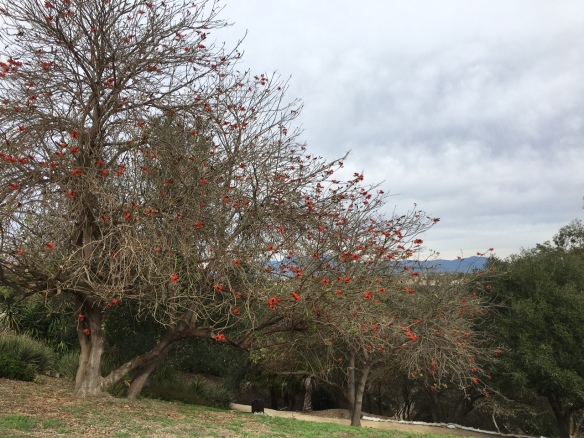
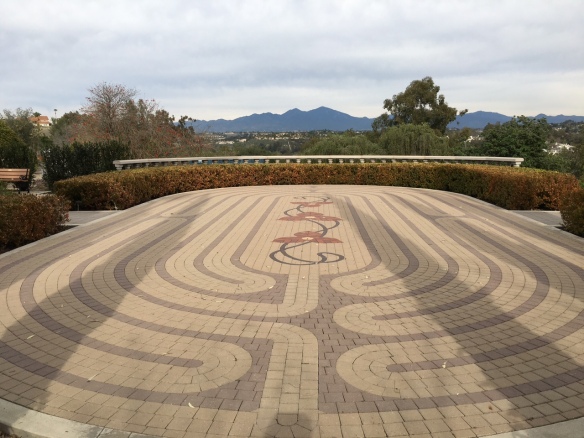

I wondered where I would walk while I was out running errands. A sign popped out at me as I drove along Crown Valley: LN Botanic Preserve.  I made a U-turn and pulled into the park full of walking paths, benches, and trees. I kept climbing the winding path until the singing of birds became louder than cars whizzing below.  When I reached the top, I was rewarded with another thing I love – a labyrinth.  I followed the maze mindfully letting all other thoughts slip away feeling nature’s peace.

Labyrinth


Peaceful Places

“The sea, once it casts its spell, holds one in its net of wonder forever.”
– Jacques Cousteau

When I’m stressed or struggle to sleep, I take some slow, deep breaths. Then I visualize a relaxing and memorable moment.  My vision is always on a beach. It’s where I go to unwind and rejuvenate. The first place I usually picture is a Caribbean island we visited with a long stretch of white sand and warm water the color of robin’s eggs.  It’s my go-to prescription for a calming effect.

image
In a memoir workshop with Roger Housden, he described, “moments of our past that are still alive for us. They shimmer their color – bright or dark. It’s an emotional laden sensation taking you underneath words.” We made lists of “shimmering images” in our lives.  One of my most extraordinary experiences was floating in Maui while listening to humpback whales hum in the water below. Although I’m nervous swimming in the ocean, it’s the most peaceful I ever felt.

image
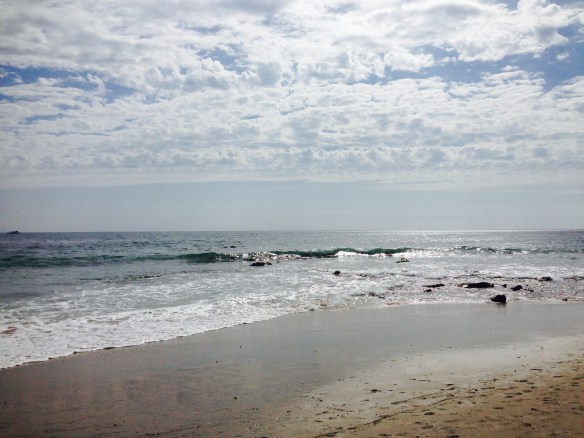
Another captivating image is watching sunlight sparkle on the water or staring out the window (like I’m doing right now) and watching waves roll in to shore. Years ago during chemo treatments, I would sit for the longest time just gazing at the beautiful blue ocean. It was part of my healing process.

image
The next time you’re tossing and turning or feeling stressed, take a moment to remember shimmering images from peaceful places.

New Year’s Resolutions

Do small things with great love” – Mother Teresa

image


We’re still on the roller coaster ride of a long Holiday season – enjoying fun times, exchanging presents, feasting on favorite foods, while also fighting effects of the season’s frenzy. As we contemplate New Year resolutions, here are a few things to help us focus on our goal:

1. Express gratitude – One of the concepts for attracting things you want from The Secret is, ” Gratitude is a powerful process of shifting your energy and bringing more of what you want into your life. Be grateful for what you already have and you’ll attract more good things.”

2. Reflect on what brings happiness and fulfillment in your life. It could be getting together with friends, taking up a new hobby, learning a new skill, volunteering for a good cause. Plan on doing more things that bring pleasure and meaning to life.

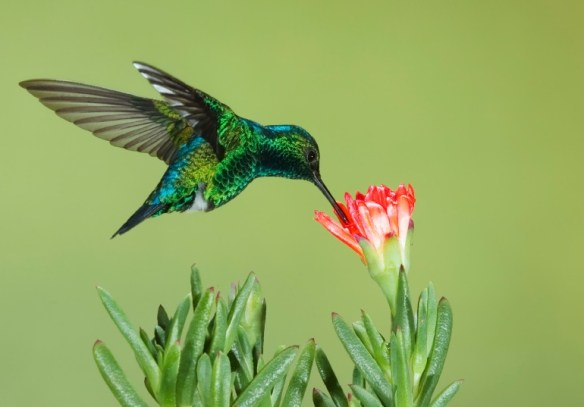
3. Let curiosity set your goals. Sometimes goal setting can be daunting thinking we need a lofty intent in mind. We want goals that are achievable, help us grow, and feel a sense of accomplishment. Something I read recently really hit home for me from Elizabeth Gilbert, author of Eat, Pray, Love. “Some people (like Elizabeth) are jackhammers. They focus intensely on one thing, diving in deeply and tuning out any other pursuit. But others are like hummingbirds, flitting from flower to flower–letting curiosity lead them from one interest to another–and making the world a better place by “pollinating” various interests with their unique contribution. Not everyone is a jackhammer! We need hummingbirds!”

So whether you’re a jack hammer or hummingbird, embrace new opportunities in the New Year!


Happy Heart

“Among the things you can give and still keep are your word, a smile, and a grateful heart.”   Zig Ziglar

happy heart

I really believe attitude and gratitude make a huge difference in our lives. The best test for a good attitude was when I was diagnosed with cancer almost 14 years ago. It was devastating to hear that dreaded word. I had two choices: feel doomed or fight for my life. Thankfully, I chose to fight and thought: This will not get me. I will beat it!   Keeping a positive spirit, doing things that made me smile and laugh, support from family and friends is what helped me through the most difficult year of my life.

It’s one of the main things I’m grateful for today. Gratitude and a happy heart go hand in hand. The more you give thanks, the better you feel. The opposite is often true too. When we grumble and groan about life, we open the door to more hardship. We all have bad days or times when things aren’t going well. It’s the course of life. I find it helpful after ranting to turn it around and recount all of my blessings. I always find the gratitude list is much longer.

There is actually an Expanding the Science and Practice of Gratitude Project at UC Berkeley and Davis to document and promote benefits of practicing gratitude which include:

  • Strengthen our immune system and lower blood pressure
  • Higher levels of positive emotions
  • Acting with generosity and compassion
  • Feeling less lonely and isolated

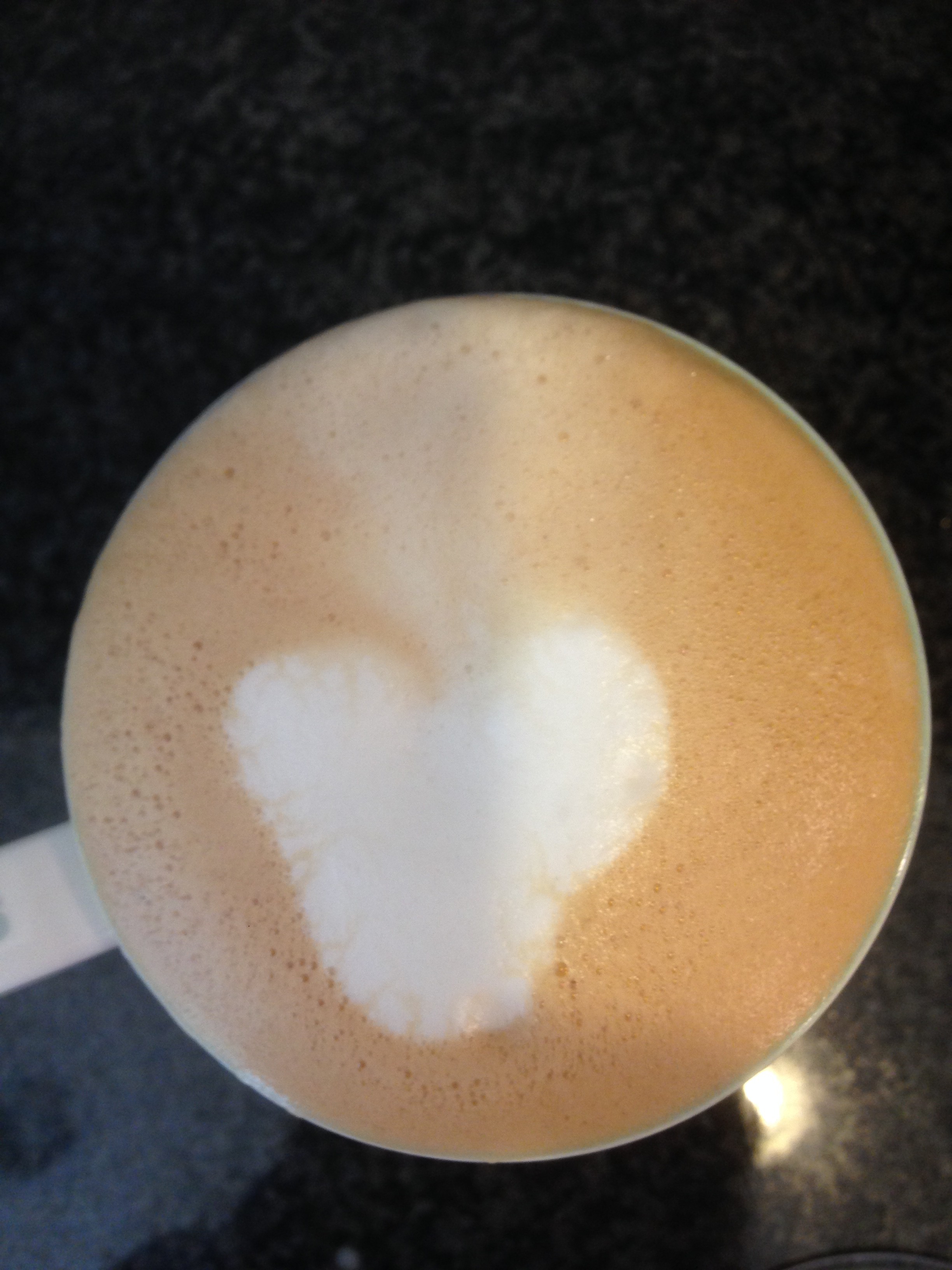
Pam Grout, author of E-Squared and E-Cubed believes our thoughts can create reality. Love her recent blog on gratitude. As I continue to feel grateful, I really do feel happier, and it makes me smile when hearts randomly appear in my morning coffee.

Listen to your gut, follow your heart

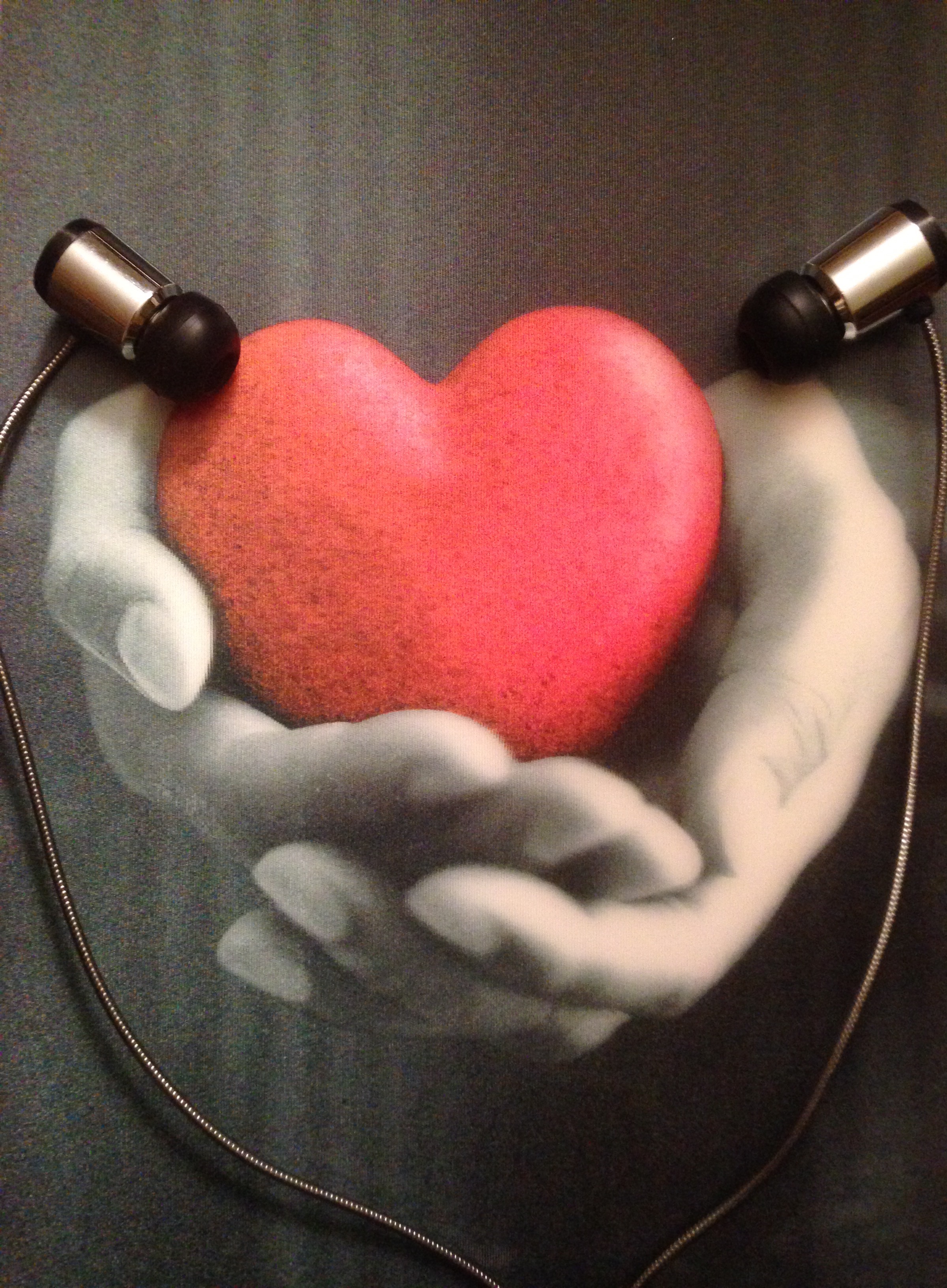
Listen to your heart

The only real valuable thing is intuition.” – Albert Einstein

I always listen to my gut.  It helps me make important decisions regarding relationships, life choices, and health questions.  It prompts me when I’m unsure of what to do, or gives me that queasy feeling when something is wrong.  The reason we have “butterflies in our stomach” and go with our “gut reaction” is because our gut is our second brain.  After many years of research we discovered the stomach is the enteric nervous system / ENS which sends signals to the brain affecting emotions, influencing memory, learning, and decision making.  Over 95 percent of the body’s serotonin is made there – which accounts for why we crave comfort food.

You can find lots of interesting information on the internet about this topic and books like The Second Brain by Michael Gershon, one of the first neurobiologists who discovered ENS.  Personally, I find it fascinating to know what I feel to be true is proven scientifically!  Listening to our heart and gut go hand-in-hand. Tuning in to their signals not only helps us make the right decision, it can actually save our life.  Critical times to pay attention to what they’re trying to tell us are:

  • Health issues – See a doctor if you feel something is wrong. Pursue a second opinion if you think a diagnosis isn’t in line with how you feel.
  • Stress / danger – Think about why your stomach is upset around certain people or situations. What is it telling you to do – Stop? Run?
  • Values, dreams, goals – what do you feel in your heart is the right thing to do? What makes you happy? I saw a great exercise on Facebook from Healing Light: “Make a list of things that make you happy. Make a list of things you do every day. Compare the lists. Adjust accordingly.”

Listen to your gut and follow your heart. Here are more tips for how to use your intuition to make decisions.

Letting the Light in

Three times today to three different people, I quoted Leonard Cohen’s lyrics: “There’s a crack in everything.  It’s how the light gets in.”   This message is profound for the world we live in today where wrinkles are blasted with botox, old buildings are torn down to build new, irregular things discarded as “damaged.”  We are led to believe everything must be perfect – free of blemishes, weathering, and cracks.

I find it refreshing the truth is imperfections give us character, fortitude, and courage to face challenges knowing all we have already overcome. Cohen’s lyrics are based on Zen beliefs where nothing is perfect.  Everyone and everything need light to survive.  Imperfections allow the light in to nourish and help us survive and thrive.

Wabi-sabi represents a Japanese world view based on the acceptance of imperfection.  Interestingly, in Leonard Koren’s (not Cohen) book Wabi Sabi for Artists, Designers, Poets, and Philosophers he notes, “Wabi-sabi is a beauty of things imperfect, impermanent, and incomplete.  It is a beauty of things modest and humble.  It is a beauty of things unconventional.”

Radhu

My mother was an artist and created two statues.  When I moved them to the studio where I write, I noticed the female’s wing was cracked.  Not being an artist myself, I wondered how I would fix it.  Then I realized I didn’t need to “fix” her because everyone and everything has cracks.  The androgynous statue: Sahu Atman meaning Sands of Time  is made of found objects and mixed media recycling old, used and broken bits and pieces of prior times.  In the artist’s statement she explained, “The severed arm is indicative of the wounds we all experience over time and our ability to move forward in the face of adversities.”

Sahu3

Imperfections are what make us unique, humble, and compassionate.  They bring awareness – letting the light in.

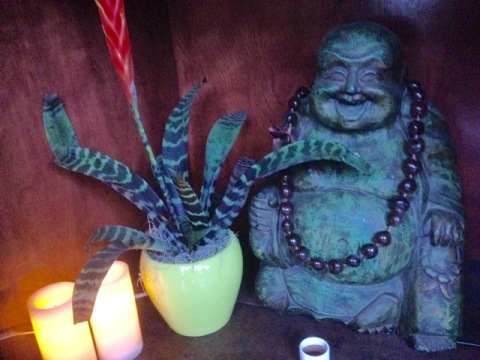
Why Does Buddha Laugh

smiling-buddha-sm4.jpgWhen the Dalai Lama came to California a couple of years ago, I listened to his lecture via a webcast.  He spoke about peace, compassion, and global leadership while chuckling frequently throughout the lecture.  I thought it was funny (unusual) he would laugh during a talk on serious subjects, but his laughter contagiously made me laugh.

Another time, I had the privilege of attending an event with Deepak Chopra and Eckhart Tolle both I admire as spiritual teachers.  Knowing of Eckhart’s difficult past, I expected him to have a serious tone.  He surprised and amused me by his elf-like laugh after each profound message.

Later I learned laughter is a sign of enlightenment – a blissful state where worries of the world are released, transcending you into a sense of joyfulness.  Once free from the conventional world, you can see the world in a new way.  Embrace it with sincerity and compassion.  The jovial expression of the Laughing Buddha, known as Bu-dai playfully encourages us to enjoy laughter of optimism.